2010年1月9日 星期六

2009年9月4日 星期五
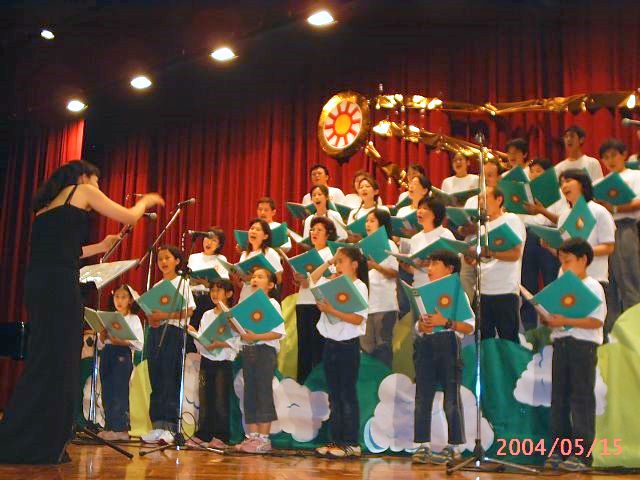
2004年台灣神追思音樂會
| 【影片】台灣料理 (2004年台灣神追思音樂會.系列回顧9) |  |
| 新聞報導 - 大地之聲 海洋之聲 護台聯盟 | |
| 作者 台灣大地文教基金會 | |
| 2009/09/04, Friday | |
|
觀看更多「2004/05/15台灣忠烈英靈追思音樂會」活動照片 追思音樂會的落幕,只是台灣忠烈英靈精神傳承的開始 系列回顧9:台灣料理 延伸閱讀: | |
2009年7月30日 星期四
save a-bian save Taiwan by human right
http://www.taipeitimes.com/News/taiwan/archives/2009/07/03/2003447747
Dear sir/madam
Pro-china President ma force the former President Chen as a criminal that ordered persecutors to let Chen’s family are on the terror condition ,so please give a-bian a hand save Taiwan democracy and human rights.
Chen won’t plead guilty, ex-lawyer says
FAMILY TENSIONS: DPP Taipei City councilors accused the media of harrassing the former president’s first grandson amid a fuss over his enrolling in a Taipei school
By Shelley Huang and Mo Yan-chih
STAFF REPORTERS
Friday, Jul 03, 2009, Page 3
Chen Chih-chung, left, son of former president Chen Shui-bian, yesterday offers free legal consultation at the Democratic Progressive Party’s Kaohsiung City chapter office. He suggested yesterday that his sister move to Kaohsiung so her oldest son could begin school there.
PHOTO: CNA
Former president Chen Shui-bian (陳水扁) will not plead guilty to the charges against him despite his family members being prosecuted, Chen's former lawyer Cheng Wen-lung (鄭文龍) said yesterday.
Cheng visited Chen yesterday at the Taipei Detention Center, where Chen has been held on corruption charges since Dec. 30 last year.
“[Chen] thinks he has not done anything illegal, so why should he plead guilty?" the lawyer said, referring to a letter former first lady Wu Shu-jen (吳淑珍) wrote to her husband reportedly reprimanding him for insisting on being a martyr even though it would ruin their daughter Chen Hsing-yu's (陳幸妤) plans to live and study in the US this fall.
Chen Hsing-yu was barred from leaving the country last Tuesday, after she, her husband, Chao Chien-ming (趙建銘), and her brother, Chen Chih-chung (陳致中), admitted to giving false testimony during investigations into the former first family's alleged corruption and money laundering.
Chen Shui-bian has been distressed since learning that prosecutors rejected his daughter’s request to be allowed to travel so she could register for studies in the US.
“[He] hopes his children would not be involved in the political fighting among adults. He hopes his children would not be hassled,” Cheng said, adding that his former client told him that “adults should resolve their political issues among themselves.”
Democratic Progressive Party (DPP) Taipei City councilors yesterday urged the media not to bother Chen Shui-bian's grandson Chao Yi-an (趙翊安), and demanded Taipei City's Education Department protect the boy's rights to study in a municipal school.
Chao Yi-an’s enrollment in the Bo Ai Elementary School became the center of attention after several users of the school’s online message board, who identified themselves as teachers and parents, voiced objections to the possibility of his entering the school.
The six-year-old is the eldest son of Chen Hsing-yu. He has reached the minimum school age, according to the National Education Act (國民教育法), and is legally entitled to enroll in the school.
DPP Taipei City Councilor Chien Yu-yen (簡余晏) said the National Communications Commission should stop media outlets from following the boy or interviewing students or teachers at the school about the issue.
“We urge the media to exercise self-restraint and not to follow Chao Yi-an around, so that he can go to school happily,” she told a press conference at the Taipei City Council.
Independent Taipei City Councilor Chen Chien-ming (陳建銘) demanded the department and the school protect the boy's right to study in Taipei.
“It would be shameful for the education field in Taipei if Chao was forced to attend
school in Kaohsiung instead because of political factors,” he said.
Lin Hsin-yao (林信耀), chief secretary of the department, said the school would “definitely welcome Chao to enroll."
Wang Jen-yu (王壬佑), director-general of the school's academic affairs department, said that any child whose household record is registered within the school's district was welcome to attend.
Meanwhile, swamped by reporters on her way to work yesterday, Chen Hsing-yu lost her temper when asked to comment on efforts to study in the US.
“Don’t push me!” “All of you will be punished!” she said as she was escorted by supporters into the dental clinic where she works.
Her brother said later yesterday that the whole family hoped that Chen Hsing-yu would move her family to Kaohsiung City, where her son could attend a local school.
Chen Chih-chung and his wife moved to Kaohsiung in February, while his mother moved there in May.
In related news, prosecutors announced yesterday they will call Wu for questioning on Tuesday on whether she solicited her children to commit perjury.
Wu's lawyer Lin Chih-chung (林志忠) said yesterday that Wu had said she would cooperate with prosecutors to protect her children.
“[Wu] said she will do whatever prosecutors ask of her, as long as prosecutors do not involve her children in the case,” Lin said.
Copyright © 1999-2009 The Taipei Times. All rights reserved.
Published on Taipei Times http://www.taipeitimes.com/News/editorials/archives/2009/07/03/2003447744
Local judicial rights under attack
By Cao Changqing 曹長青 Friday, Jul 03, 2009, Page 8
The Democratic Progressive Party (DPP) leadership has finally taken action, demanding
that former president Chen Shui-bian's (陳水扁) judicial rights be respected.
In New York and Los Angeles, a dozen Taiwanese groups recently held concurrent press conferences, initiating a yellow-ribbon campaign for Chen. This is a US tradition through which people remember and campaign for the release of prisoners of war. By wearing yellow ribbons, these Taiwanese Americans were showing their concern for the former president's judicial rights. While many overseas Taiwanese were unable to make their minds up when allegations of Chen's corruption first surfaced, they are now massively in support of protecting his judicial rights. Judging from reactions at speeches I have given in Taiwanese communities in several US cities recently, most audience members are angry at President Ma Ying-jeou's (馬英九) government over Chen's long detention. Their strong reaction has at least three main causes. First, a just trial can only take place in a fair judicial environment. But the media has been reporting the details of Chen's case right from the start, prompting the public to find him guilty before the trial is over. Later, the judge presiding over his case was suddenly replaced, suspects were detained to extract confessions and the trial record was manipulated. In this highly unfair judicial environment, a just trial is impossible. Despite the prosecutors' many charges, a just trial is possible only in a fair judicial environment, no matter how serious the charges against Chen. The government is guilty of illegal detention, an improper change of judge and the falsification of trial records. Under these circumstances, it is not possible to truly investigate whether Chen is guilty of corruption.
The sequence should be to first guarantee his judicial rights and then proceed with the trial on the premise of a just judicial environment protected by the judicial system. Second, the negative consequences of the government's power abuse are much more serious than individual corruption. I have repeatedly emphasized this concept in my newspaper articles. In all societies that have suffered under dictatorship, people are indifferent to their personal rights because they are accustomed to the government's abuse of power and they have become able to endure it. At the moment, the government's abuse of judicial rights is obvious and rampant. Even the pro-blue Chinese-language China Times has published an editorial saying that Chen's long detention may damage democracy and the rule of law. If the government can trample on the former president's judicial rights today, it can do the same thing to anyone tomorrow. Some say that the judiciary is not only unfair to Chen alone and that we should call for fair prosecution of all cases. Certainly, we must safeguard every individual's human rights, but it goes without saying that celebrity cases usually attract more attention and have a greater influence. This is why the media invited medical experts to discuss cardiac disease after Michael Jackson's death, although countless people die of heart disease every day. Third, the government is becoming more arrogant. This is frightening when we look to Taiwan's future. Most pan-green camp supporters feel that Chen's long detention is political retaliation by the Chinese Nationalist Party (KMT) and the Chinese Communist Party (CCP) that is meant to destroy the green camp's morale and crack down on Taiwanese independence. In addition, Ma has filed a lawsuit against prosecutor Hou Kuan-jen (侯寬仁) accusing him of forgery during his investigation of Ma's handling of his special allowance fund.
Meanwhile, first lady Chow Mei-ching (周美青) has filed a lawsuit against political commentator Chin Heng-wei (金恆煒) and some others for allegedly defaming her. The blatant arrogance of the incumbent president and his wife in suing private citizens is making a growing number Taiwanese feel ill at ease, especially after a group of Taiwan experts in the West repeatedly petitioned the government to demand that Chen be given his judicial rights, and after the government ignored criticism by Ma's law professor and mentor Jerome Cohen of the current situation in several newspaper articles. How can we not worry about the consequences when such a government is in total control of Taiwan? Even at a time when Ma's government is treating the cases of alleged corruption against Chen as political, some in the pan-green camp still treat them as a judicial issue. Perhaps some of them are politically unwise because of their own blind spots, and perhaps some have other motivations. The pan-green camp's understanding of the CCP, the KMT and Chen's corruption trial is directly related to the nation's future. It is difficult to imagine the negative consequences of any mistaken decisions. Cao Changqing is a freelance journalist based in the US. TRANSLATED BY EDDY CHANG
Copyright © 1999-2009 The Taipei Times. All rights reserved.
Dr yang taiwantt.org.tw 2009/7/3
2009年7月22日 星期三
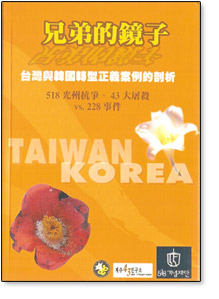
兄弟的鏡子
| 兄弟的鏡子—讀書心得(1) | |
| 新聞報導 - 楊緒東專欄 | |
| 作者 台灣大地文教基金會董事長 楊緒東醫師 | |
| 2009/07/20, Monday | |
|
photo source: 228事件紀念基金會 *粗體字為楊緒東醫師撰寫之書評 前言: (未完待續,撰於2009/06/20) 延伸閱讀: | |
| 最後更新 ( 2009/07/22, Wednesday ) | |
2009年4月3日 星期五
2009年3月22日 星期日
霧社人止關-我思我見(5)
| 霧社人止關-我思我見(5) | |
| 新聞報導 - 楊緒東專欄 | |
| 作者 台灣大地文教基金會董事長 楊緒東 | |
| 2009/03/22, Sunday | |
|
*粗體字為楊緒東醫師撰寫之書評 (這本書雖然是以小說形式來著作,但是書中所敘述的情結,就是中國黨在台的寫照。) 阿石來台的清理工作,就交付屠夫來執行,真有他媽的辦法。 延伸閱讀: | |
2009年3月5日 星期四
228 article-----ohh
台灣連翹-我讀我見(7) 列印
新聞報導 - 楊緒東專欄
作者 台灣大地文教基金會董事長 楊緒東
2009/03/05, Thursday
誘因果報
*粗體字為楊緒東醫師撰寫之書評
林頂立,以台制台,殺人太多是台奸,年老心理不安,做為某道場的信徒,還是受到陰靈的糾纏,終而…進入精神錯亂,鬱鬱而終。
關於林頂立,民報主筆陳君曾說:光復當初,他在本省有錢的一個宴席上誇下海口,表示只有他和陳儀長官兩個人可以直接與蔣主席見面,其他人則不可能直接見到他。此人得意洋洋的自我吹噓,由此亦可知其人品高下。他那種睥睨左右目無餘子的狐假虎威的樣子,使座上諸人幾乎為之心膽俱裂。當時,他是台灣特務的最高頭頭,任台灣站長。
吳濁流著,鐘肇政譯,1994,《台灣連翹-台灣的歷史見證》,前衛,台北,p.195
白先勇的父親有正直之風,台灣人對他頗為信任,但是中國黨的特務仍然猖狂。
長官公署對本省人的民主要求非常不悅,仍然守著特權地位,實施專制政治。他們認為只要利用二二八事件,給予沉重一擊,便可以使本省人像屈服於日本人那樣,屈服於外省人。因此,援軍一經基隆登陸,立即逮捕了領導人物,未經法院的審判,就以共產奸黨名義殘殺,而真的共產黨人早就逃逸,連一個犧牲者也沒有。省國民黨黨部認為二二八事件是因為陳儀的失政而引起,採相反的立場向中央提了報告,因而中央便發表將派白崇禧來台,處理事件。600萬島民才鬆了一口氣,這是因為白崇禧素有小孔明的雅稱,所以認為必能圓滿處理的。
吳濁流著,鐘肇政譯,1994,《台灣連翹-台灣的歷史見證》,前衛,台北,p.196
辜顯榮的出線,其功過真是難下定論,不過投機的性格加上時代的「運氣」,的確生活得較為舒適,台灣人不可羨慕。
正在準備登陸之際,來到的就是那位辜顯榮。他表示希望能夠面謁總督。他說:日前台北城,敗兵正在大肆奸淫刼掠,陷入混亂當中,因此希望能夠早一刻出兵,而那些敗兵,不可能對皇軍有任何抵抗。
這時,眾人眼中的辜顯榮,容貌魁偉,裸體上披網衣,跛足,有人懷疑是刺客,主張勿予延見,經水野局長提議不妨一試,始被允晉見。關於辜顯榮,台灣新報上自明治31年(1898)2月2日起連載題為「辜顯榮的怪行閱歷」一文,要旨如後:
辜顯榮出生於台中縣下下虎港,固賤民也。我領台以前居住故鄉鹿港,上有母下有妻兒,另有兄弟三人,辜顯榮自小放縱,兄弟為矯正其素行,屢加規勸,均如馬耳東風,或結群於市井,或詐騙金錢,行為不端,因而為鄉黨所嫌厭糾彈,以致無法久居故里,遂出奔台北,流浪於艋舺、大稻埕一帶,混跡苦力轎夫之間以渡日。渠恒能統御同夥,堪謂奇才,因而能領袖群倫,被推為首領,經常率領黨徒,嘯傲市街,在茶肆酒館則白吃白喝,時而假酒恐嚇富家,橫行無忌。明治27年(1894)夏我帝國興問罪之師後,餘波及於台灣,一時島內各地妖言浮說紛傳,一如鼎沸,傳言謂一旦日軍來攻,全島島民將被殘殺,無能倖免,以致人心惶惶,不可終日。顯榮平日深受指彈,怏怏度日,無時不思有所出人意表,逢此混亂,以為良機已至,趁國家禍亂人心恐慌,達成多年夙願,此正其時,仍急嘯聚徒眾 70餘人,往訪巡撫唐景崧麾下某武官,諉稱願為抵擋日軍之前鋒,得若干錢糧以為糊口之資。其後近衛師團登陸三貂嶺,基隆防線迅速崩潰,唐景崧聞風棄城逃遁,顯榮察得機先,向70餘名夥伴謊稱探查敵軍軍情,隻身赴基隆,謂:為迎日軍,冒烽火之險前來,請求謁見樺山總督及水野民政局長。軍中雖亦有二、三異議者,終究因水野局長主張不妨一試,樺山總督亦表同意,乃予延見。
吳濁流著,鐘肇政譯,1994,《台灣連翹-台灣的歷史見證》,前衛,台北,pp.197~198
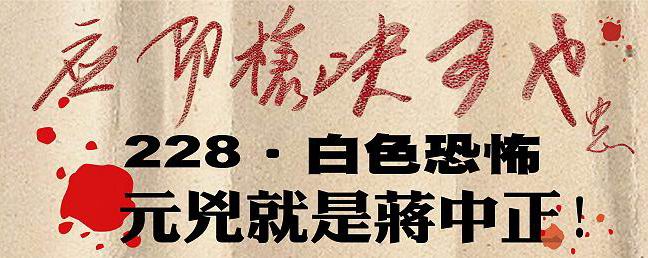
白色恐怖就是一種連鎖反應,被懷疑就是「死路一條」。
不僅王白淵,名士們一個個地被抓去,沒有一個人可以安心過日子。整個社會都落入恐怖狀態裏。從被捕者的家裏搜取名片、照片,做為檢舉的根據,大抓特抓。初見面時交換的名片也危險,萬一一起照了相,那就成了同夥的有力證據。尤其學生們經常一起拍照,被株連的無辜特多。到朋友家去閒坐,也成了一件可怕的事,萬一這朋友家有人被捕,訪客也可能遭連累。本島人都被逼進這樣的處境當中,人人需求明哲保身,非極熟識的友人便不敢來往。我也乖乖地躲在家裏,開始寫隨筆『黎明前的台灣』。
吳濁流著,鐘肇政譯,1994,《台灣連翹-台灣的歷史見證》,前衛,台北,p.205
阿九發的消費券是子孫的債務,大家不要太高興,若能取消18%做為每月的消費券,每月$3,600分發給全民,才是福德。
南京政府為了一面與地方軍閥打仗一面維持政權,所實施的經濟政策重點,就是公債的發行,從中華民國開國到抗日戰爭的25年間,政府發行了28億公債,其中80%弱是南京政府在10年內所發行的。這就是說,政府是靠這公債政策,來讓銀行資本家獲取暴利。這是因為公債並不是讓一般民眾去買的,而是以別國所不可見的大折扣(約五六折)讓銀行吸收。銀行得到莫大利潤,便成了寄生於政府的銀行資本,日漸膨脹。銀行從民間吸收款子,購入公債,而這公債有一定的利息,且無虞倒賬,自然極為有利。另一面,政府本身也從1927年起到三四年之間發行了11億元的公債,實收6億元(約五七折)。這種政策雖然不健全,卻也使政府收入略微增加。
然而,這銀行的控制權卻屬於四大家族。宋子文出任中央銀行第一任總裁,而後孔祥熙繼之。中國銀行與交通銀行也由宋孔二人承當,處理農村金融的農民銀行則由蔣主席與陳果夫支配。其他主要銀行裏,也有四大家族直系人物,以政府代表身分插手,掌握實權。
吳濁流著,鐘肇政譯,1994,《台灣連翹-台灣的歷史見證》,前衛,台北,pp.207~208
阿九成為武林至尊,人人帶衰則是因果報應,可是阿九快樂得很,有許多婦女同胞,遇到他還是會吱吱大叫,真不可思議。
我常常夢中驚醒,以為身處瘋人院,相信阿九的人,現在人人喊幹xx,中國黨說的話能相信嗎?
然而,一般民眾因二二八事件的恐怖,使得夢境裏的政治熱潮一下子冷卻了。大家都開始想到,為一己生活的安定而努力,才是安全的。如此一來,本省人的共同精神分裂了,產生了前文所述的四派,及超越派、妥協派、理想派、抵抗派,與日本侵臺當時,因日本軍政的壓力而招致的本島人思想之分裂如出一轍。
趁這樣的當兒,半山們冒出來了,取得了代表本省人的地位,加上二二八事件出賣本省人有功,遂躍上政治舞台上的主峰地位。這些半山們和外省人勾結,形成了新的貪污官僚社會。半山曾是與政府之間的橋樑,如今本省人再也不敢信賴他們了,這麼一來,臺灣人之間的民意,也就不容易反映給政府了。
吳濁流著,鐘肇政譯,1994,《台灣連翹-台灣的歷史見證》,前衛,台北,p.222
(未完待續,撰於2009/01/17)
延伸閱讀:
台灣連翹-我讀我見(6)
台灣連翹-我讀我見(5)
台灣連翹-我讀我見(4)
台灣連翹-我讀我見(3)
台灣連翹-我讀我見(2)
台灣連翹-我讀我見(1)
Hsutung's BLOG
楊緒東專欄
關閉視窗